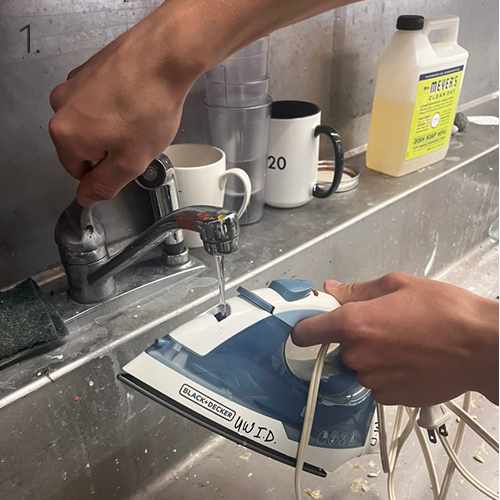
Observing real users interact with existing ironing setups revealed the pain points no survey could surface — awkward setup, cord management, and the physical effort of breaking the board down.
These moments of friction became the design brief.
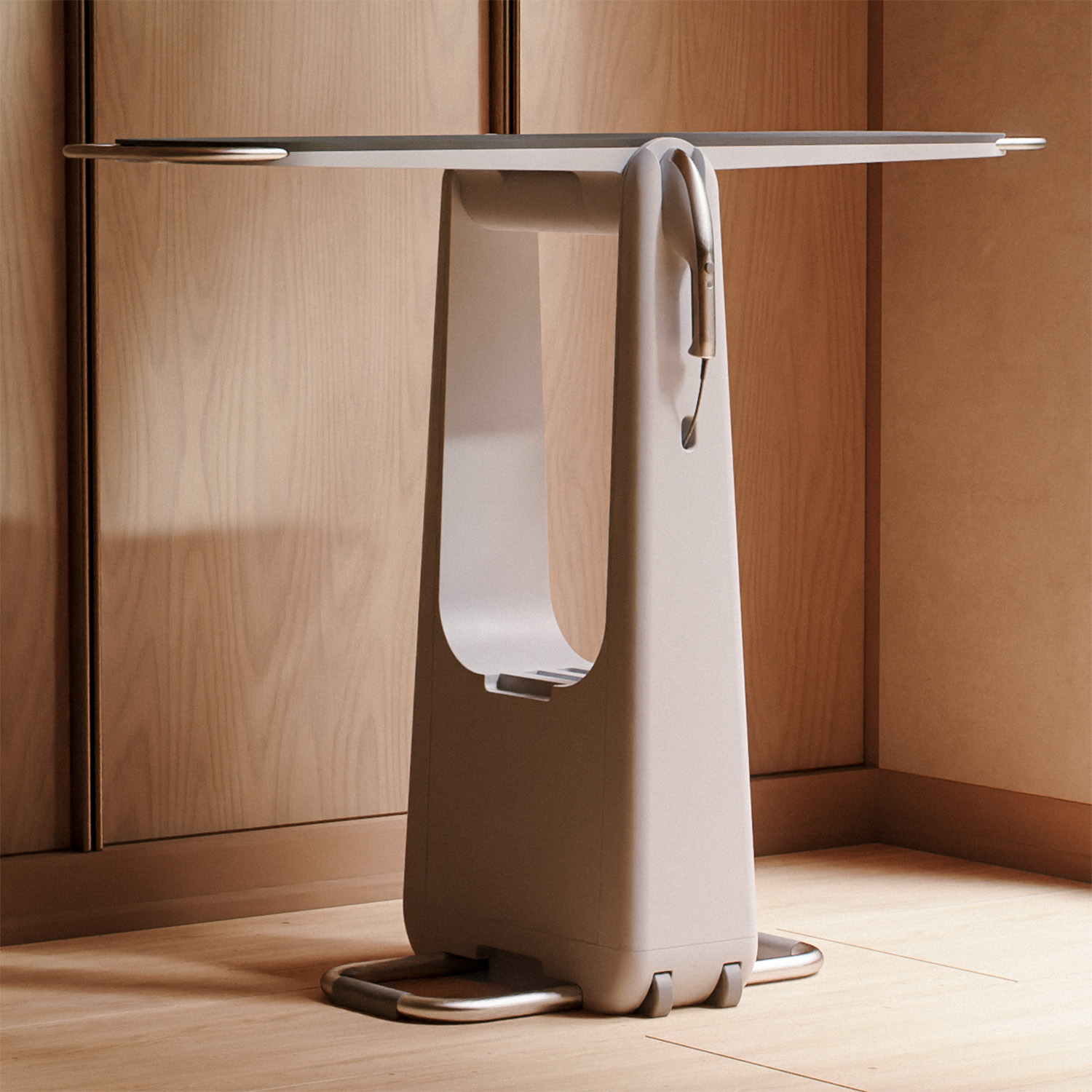
Ironing Board System — Industrial Design, 2024
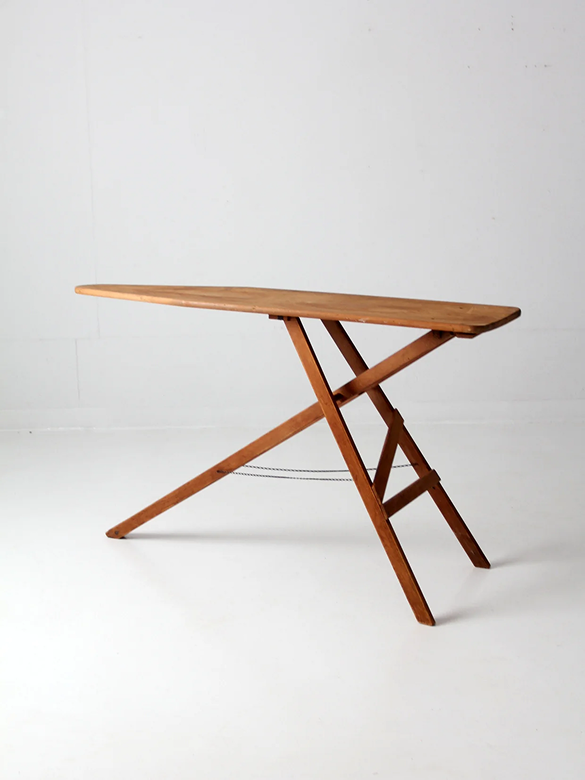
Nothings changed in 100 years.
Little has been done to improve the set-up and storage of the outdated 1893 board. We still struggle with the same problems today.
…How might we create a safe, efficient and compact ironing + steaming solution for apartment residents?
Competitive Analysis
Mapping the current landscape of ironing and steaming products to identify unmet needs and opportunity space.
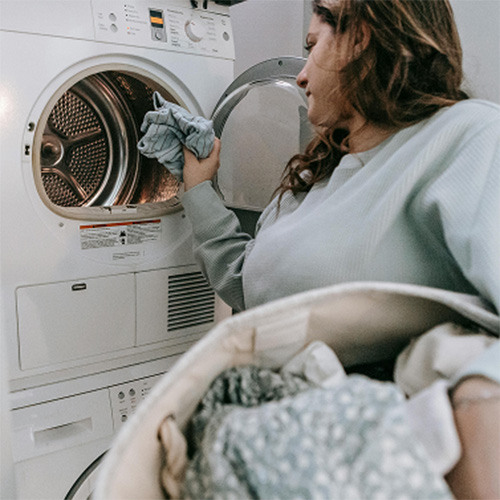


Students and young professionals living in small apartments who prioritize convenience and compact storage over traditional ironing setups.
Users frequently wash and wear, relying on quick touch-ups rather than full ironing sessions — steaming fills a gap no current product bridges well.
Shared laundry spaces and limited storage make a self-contained, portable solution essential for apartment residents.
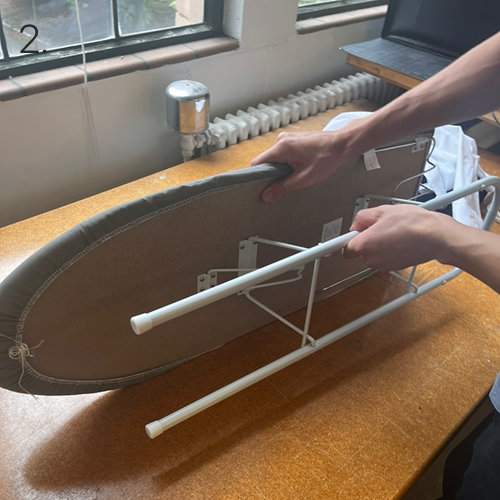
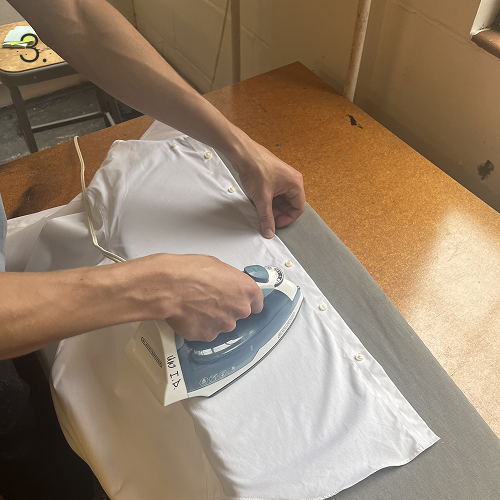
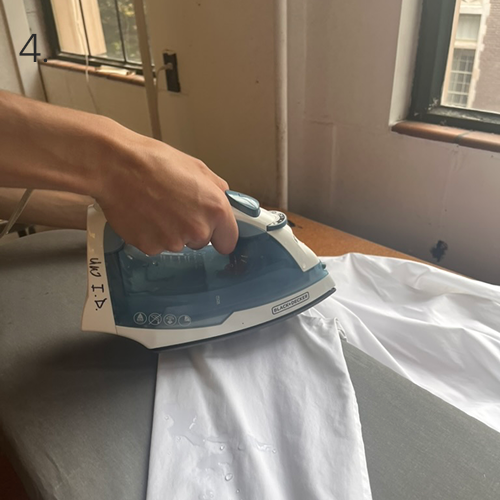
watching not instructing
Observing real users interact with existing ironing setups revealed the pain points no survey could surface — awkward setup, cord management, and the physical effort of breaking the board down.
These moments of friction became the design brief.
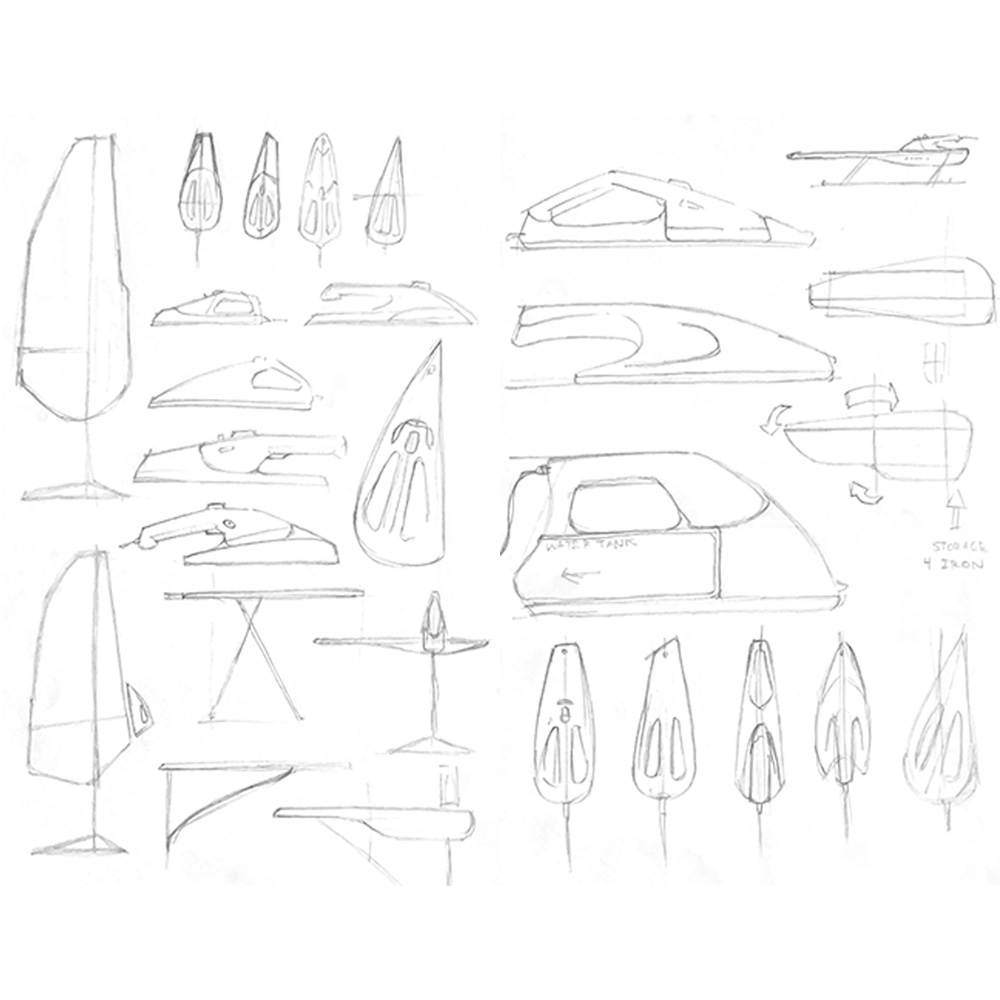
rapid visualization
Quick sketches allowed us to push volume, explore configurations, and break away from the conventional ironing board silhouette.
Over 60 concepts were generated in the first two days before converging on a direction.

finishing line
Refining the steamer's ergonomic profile — docking built into the form, heat-resistant handgrip, and a two-in-one water/power cable reducing visible clutter.
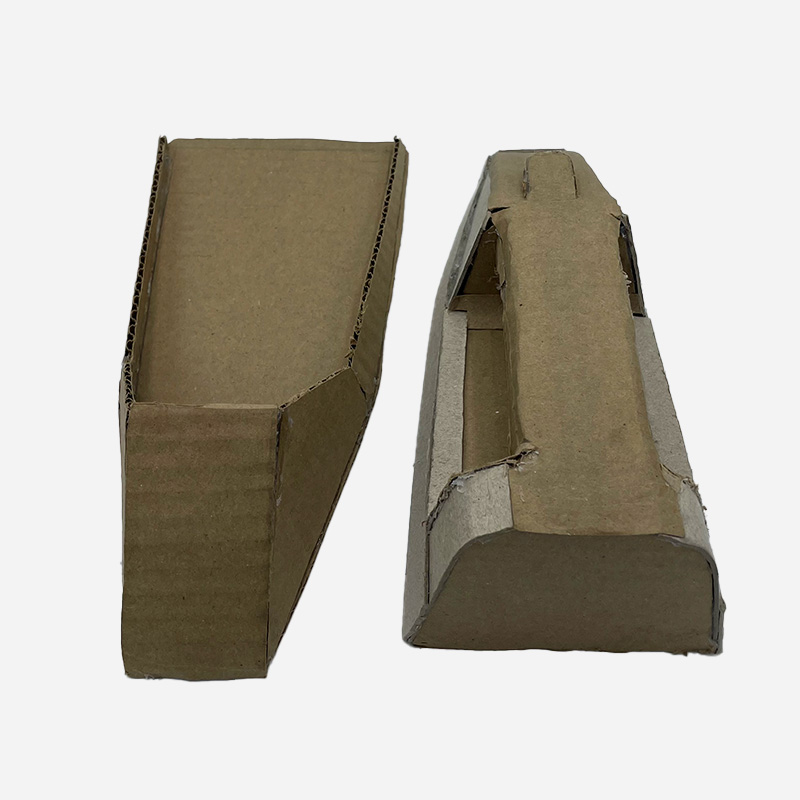
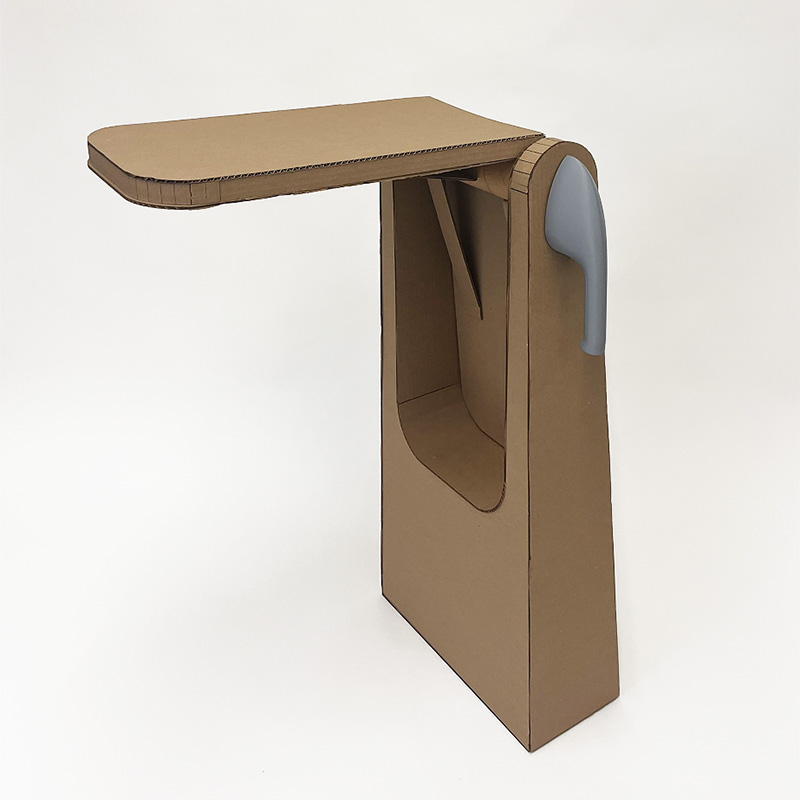
volume + studies
Initial prototyping captured the form at 1:1 scale to test the ergonomics of the steamer handgrip and understand how it relates to the body.
volume + studies
Quickly prototyping captured the full form of the body, allowing the team to evaluate usability in real space and confirm key dimensions before committing to scale.
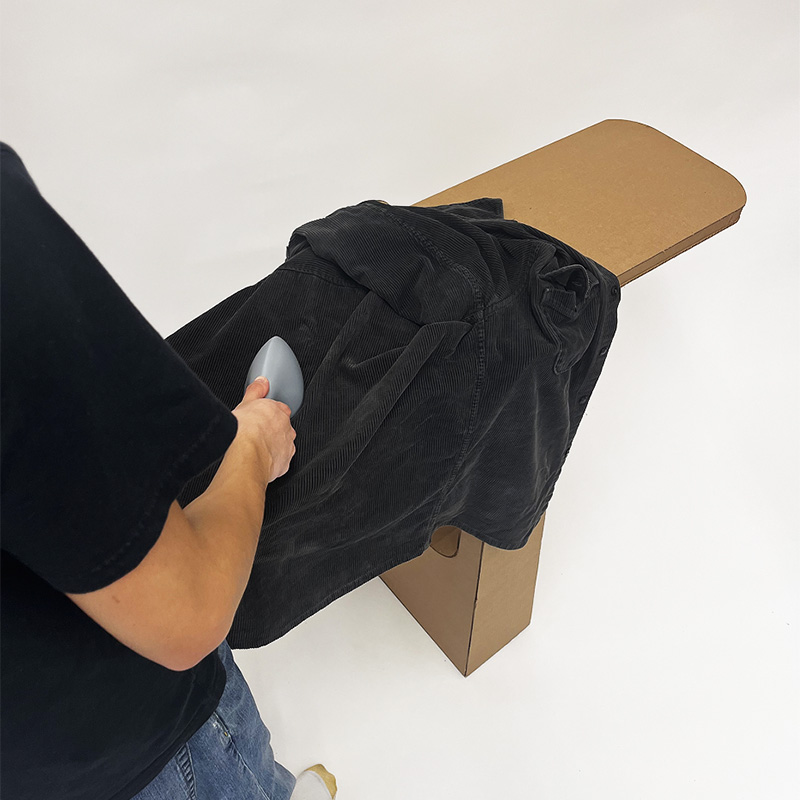
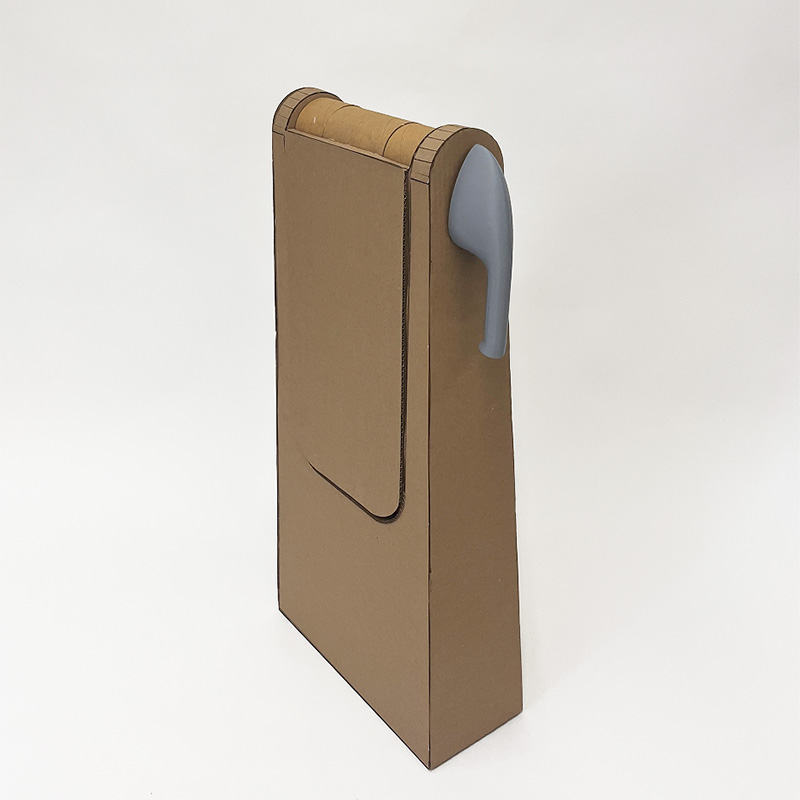
volume + studies
More prototyping explored the final body form from a side view, validating how the board collapses and integrates with the base for a compact storage profile.
volume + studies
User testing with the cardboard prototype confirmed the board height, ironing posture, and steamer reach — surfacing issues corrected before moving to full scale.

volume + structure
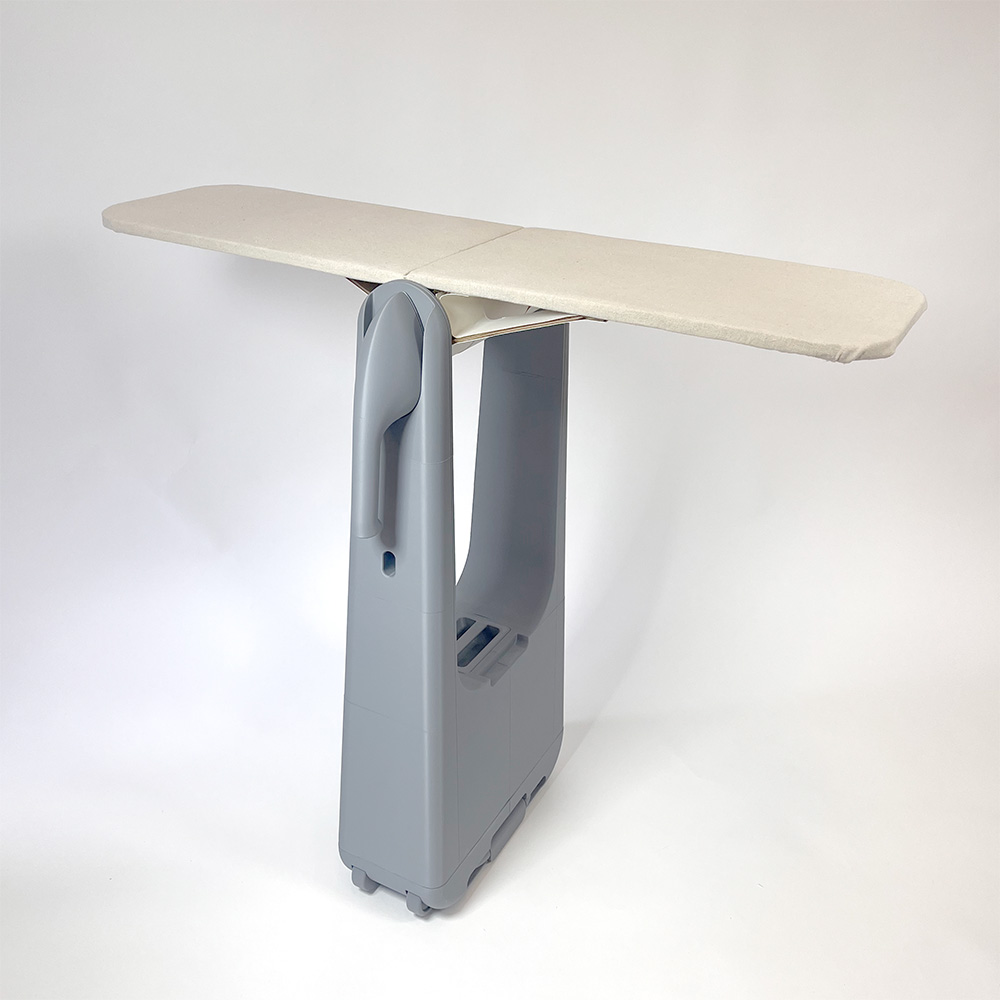
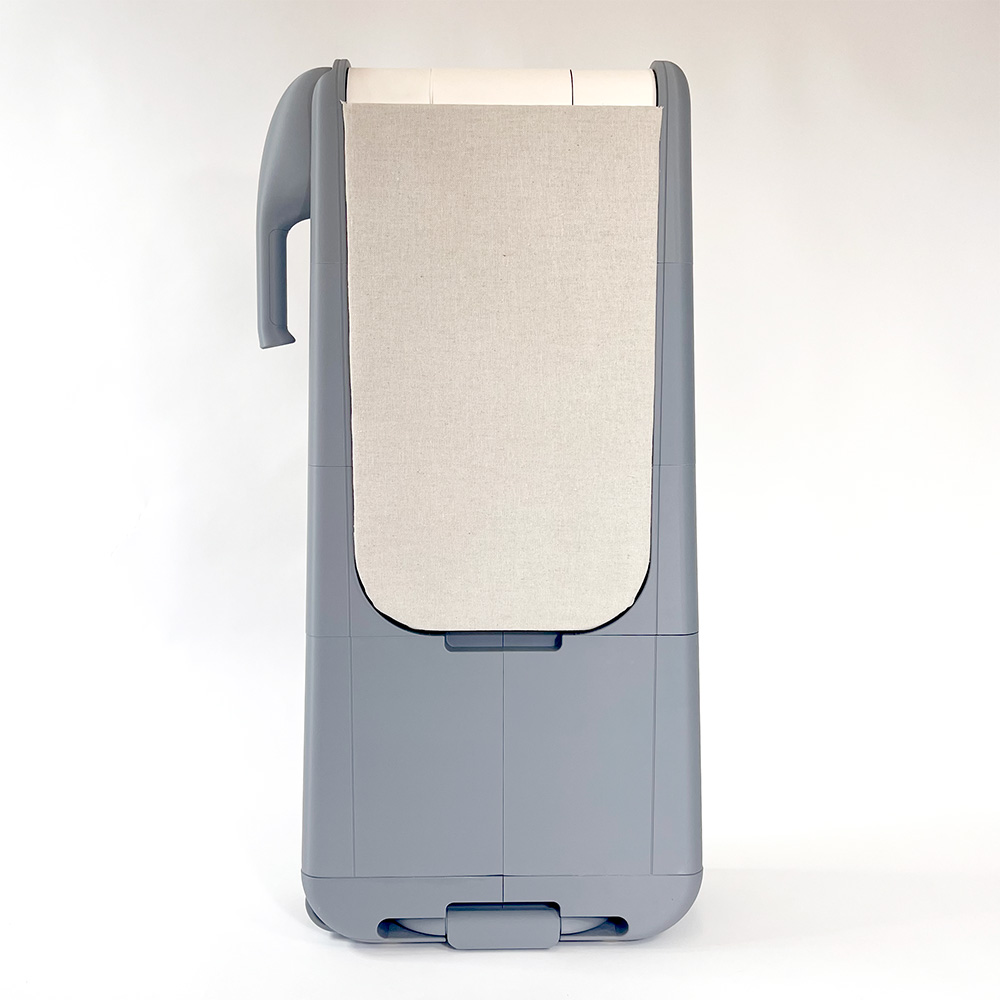
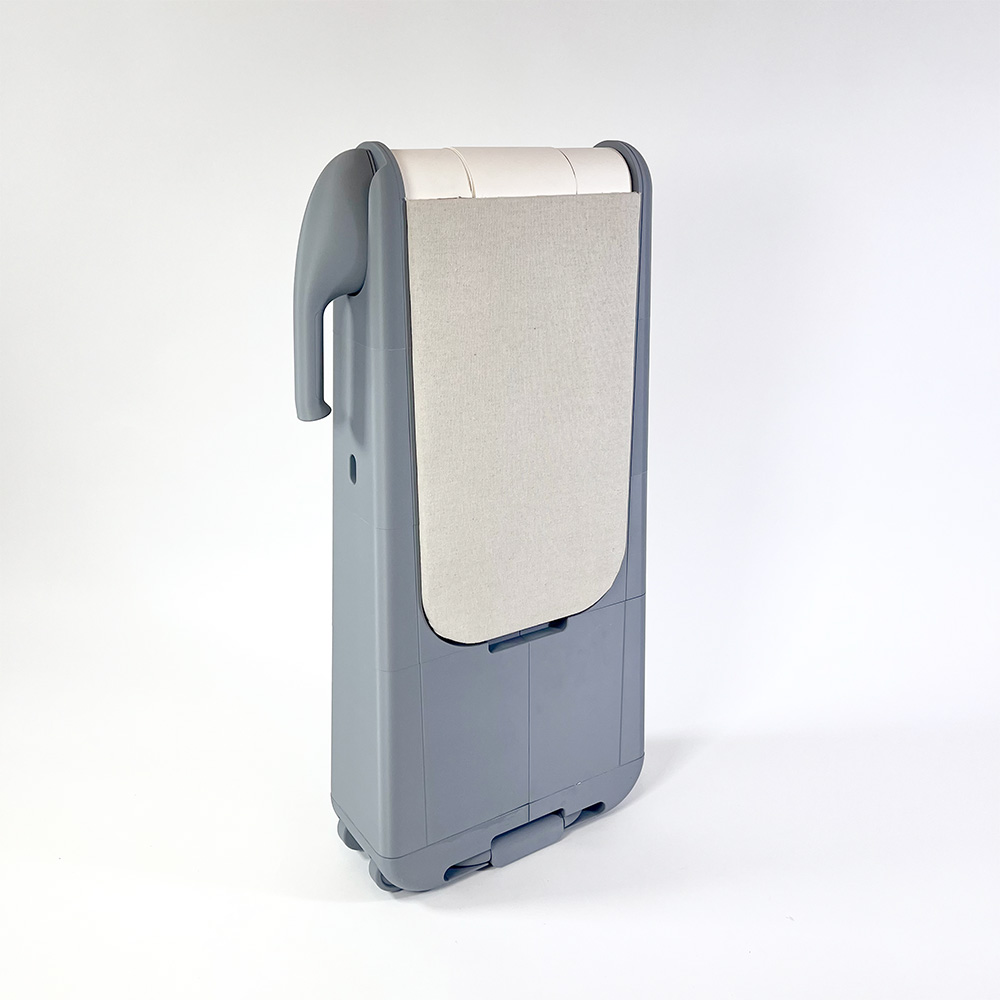
The full-scale model confirmed the board-to-body proportion, hinge mechanism, and handle ergonomics at 1:1 — revealing refinements needed before final CAD.
Testing the three configurations — ironing, steaming, and storage — validated that all transitions were intuitive and the footprint remained compact throughout.
volume + structure
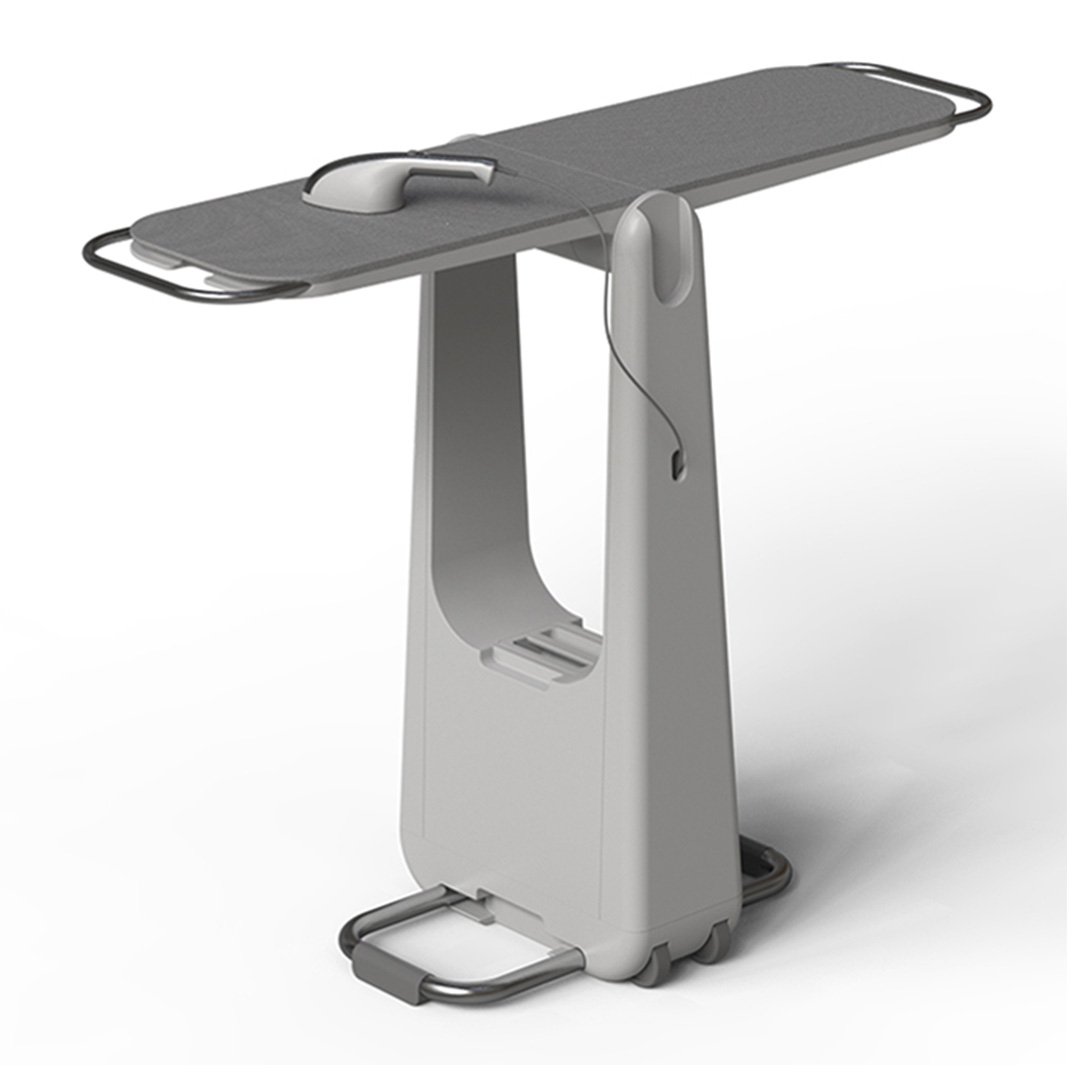
Final prototyping carried the full form into refined materials — testing surface quality, hinge precision, and the steamer dock fit before final presentation.